12th July 2026 10.30am – 6th Sunday after Trinity – Eucharist

Watch this week's service on YouTube

Download the order of service here:  26 07 12 6th Sunday after Trinity

Read this week's Church News


The Readings

Romans 8. 1 - 11

There is therefore now no condemnation for those who are in Christ Jesus. For the law of the Spirit of life in Christ Jesus has set you free from the law of sin and of death. For God has done what the law, weakened by the flesh, could not do: by sending his own Son in the likeness of sinful flesh, and to deal with sin, he condemned sin in the flesh, so that the just requirement of the law might be fulfilled in us, who walk not according to the flesh but according to the Spirit. For those who live according to the flesh set their minds on the things of the flesh, but those who live according to the Spirit set their minds on the things of the Spirit. To set the mind on the flesh is death, but to set the mind on the Spirit is life and peace. For this reason the mind that is set on the flesh is hostile to God; it does not submit to God’s law—indeed it cannot, and those who are in the flesh cannot please God.

But you are not in the flesh; you are in the Spirit, since the Spirit of God dwells in you. Anyone who does not have the Spirit of Christ does not belong to him. But if Christ is in you, though the body is dead because of sin, the Spirit is life because of righteousness. If the Spirit of him who raised Jesus from the dead dwells in you, he who raised Christ from the dead will give life to your mortal bodies also through his Spirit that dwells in you.


Matthew 13. 1 - 9, 18 - 23

That same day Jesus went out of the house and sat beside the sea. Such great crowds gathered around him that he got into a boat and sat there, while the whole crowd stood on the beach. And he told them many things in parables, saying: “Listen! A sower went out to sow. And as he sowed, some seeds fell on the path, and the birds came and ate them up. Other seeds fell on rocky ground, where they did not have much soil, and they sprang up quickly, since they had no depth of soil. But when the sun rose, they were scorched; and since they had no root, they withered away. Other seeds fell among thorns, and the thorns grew up and choked them. Other seeds fell on good soil and brought forth grain, some a hundredfold, some sixty, some thirty. Let anyone with ears listen!” “Hear then the parable of the sower. When anyone hears the word of the kingdom and does not understand it, the evil one comes and snatches away what is sown in the heart; this is what was sown on the path. As for what was sown on rocky ground, this is the one who hears the word and immediately receives it with joy; yet such a person has no root, but endures only for a while, and when trouble or persecution arises on account of the word, that person immediately falls away. As for what was sown among thorns, this is the one who hears the word, but the cares of the world and the lure of wealth choke the word, and it yields nothing. But as for what was sown on good soil, this is the one who hears the word and understands it, who indeed bears fruit and yields, in one case a hundredfold, in another sixty, and in another thirty.”


Scripture Quotations are from: New Revised Standard Version Bible: Anglicized Edition, copyright © 1989, 1995 National Council of the Churches of Christ in the United States of America. Used by permission. All rights reserved worldwide. http://nrsvbibles.org

The Sermon
Prepared by Catherine, Reader at St Mary's.

Some years ago we enjoyed a television programme - “The secret life of 5 year-
olds”. About 10 small children spent a fortnight in a purpose-built school room
and outdoor play area. Cameras were hidden all over the place, and the
children wore microphones. They were given different challenges and
activities throughout the day. Some child psychologists hid in another room,
watching and listening to the children interact with each other (sometimes
collapsing in hysterics), and explained to the viewers what they thought was
going on.

In one episode they wanted to see how the children behaved in single sex
groups. The play area was set up with plenty of activities which could perhaps
interest, in particular, boys or girls. The girls were let in first. They quickly
found the dressing up area and got busy putting on clothes and make up.
Except one. She had discovered the dinosaurs. She asked each of the other
girls in turn to play dinosaurs with her, but they weren't interested. And she
wasn't interested in make up. No one wanted to play with her, and she got
upset.

Interestingly, when it was the boys’ turn, they played with both the dinosaurs
and the dressing up, and I don’t remember anyone being left out.

When you’re a child, sometimes your friends will play. Sometimes they
won’t. It’s that stark. Compromise is something 5 year-olds are only just
starting to navigate.

Only a handful of stories show Jesus interacting with children. He heals a few.
He blesses some. He gratefully accepts a boy’s offering of loaves and fish to
share with a crowd. And yet from today’s gospel reading it is clear that he
understands children well.

Jesus has watched children at play. He's seen their efforts to get other children
to join in. And he’s noticed two games in particular that the children of the day
play - wedding games and funeral games. In the wedding game the girls play
flutes, whilst the boys dance. In the funeral game the boys sing dirges and the
girls wail.

But sometimes the other children don't want to play. So the girls play their
flutes, but the boys won't dance. Or the boys sing, but the girls won’t wail. And
so neither game will happen. When the others won't join in your game you get
upset.

Children watch adults and they copy them. The wedding and funeral games
copy what the grown-ups get up to. The game is a mirror of ordinary social
life.

Jesus notices the way children watch and copy the adults. And now he uses the
children’s games to describe Israel’s response to God. God is inviting Israel to
join in the “Kingdom game”.

To join the “Kingdom Game” there are two things God wants Israel to do. The
first is to recognise where things have gone wrong, own their part in this, and
turn back to the way of God. The second is to celebrate the world that God has
given them, with all its good things, and enjoy it together.

John the baptist is the first to call Israel to the game. He is strict, lives frugally
and urges the people to repent. It’s a bit like the boys’ dirges in the funeral
game. But Israel’s people are suspicious of someone so sober and stern and
don't want to listen.

Then comes Jesus. He heals the sick, befriends the poor and likes a good
party. A bit like the girls’ flute-playing in the wedding game. But the people
are suspicious of him too, because he likes to have a good time. So they won't
join him either. No one wants to be part of the “Kingdom game”. And Jesus is
rather upset.

But all is not lost.

Jesus knows that while some children don’t want to play, others do. You just
have to find them. It’s like that with the “Kingdom game” too. Some people do
respond to John and to Jesus. They are like children keen to learn,open to
God’s forgiveness. And they’re not the supposedly wise religious leaders, but
ordinary, everyday people with receptive hearts. People who have struggled to
follow the strict lifestyles adopted by the Pharisees, with their impossibly
heavy burdens. People who welcome the chance to take on a light burden and
to learn from a caring teacher.

I can’t remember what happened next with the little girl and the dinosaurs in
the TV programme. But there were caring teachers around and plenty of other
activities to try. And maybe in time, she might have found some dinosaur
loving playmates away from the cameras.

So, are we ready to join in the “Kingdom game”? Let’s play!


The Prayers
Prepared by Paul.


Common Worship: Times and Seasons, material from which is used here is copyright (c) 2010 The Archbishops' Council

 

15th March 2026 at 10.30am – Mothering Sunday Eucharist

The Readings.

2 Corinthians 1. 3 - 7 

Blessed be the God and Father of our Lord Jesus Christ, the Father of mercies and the God of all consolation, who consoles us in all our affliction, so that we may be able to console those who are in any affliction with the consolation with which we ourselves are consoled by God. For just as the sufferings of Christ are abundant for us, so also our consolation is abundant through Christ. If we are being afflicted, it is for your consolation and salvation; if we are being consoled, it is for your consolation, which you experience when you patiently endure the same sufferings that we are also suffering. Our hope for you is unshaken; for we know that as you share in our sufferings, so also you share in our consolation.

Scripture quotations are from: New Revised Standard Version Bible: Anglicized Edition, copyright © 1989, 1995 National Council of the Churches of Christ in the United States of America. Used by permission. All rights reserved worldwide. http://nrsvbibles.org

The Sermon
Prepared by The Revd Canon James Wilson.


The Prayers

As children of a loving God who always listens to our cries, let us pray to our Father in heaven.

Loving God, you have given us the right to be called children of God. Help us to show your love in our homes that they may be places of love, security and truth.
God of love,
hear our prayer.

Loving God, Jesus, your Son, was born into the family of Mary and Joseph; bless all parents and all who care for children; strengthen those families living under stress and may your love be known where no human love is found.
God of love,
hear our prayer.

Loving God, we thank you for the family of the Church. We pray that all may find in her their true home; that the lonely, the marginalized, the rejected may be welcomed and loved in the name of Jesus.
God of love,
hear our prayer.

Loving God, as we see the brokenness of our world we pray for healing among the nations; for food where there is hunger; for freedom where there is oppression; for joy where there is pain; that your love may bring peace to all your children.
God of love,
hear our prayer.

Merciful Father,
accept these prayers
for the sake of your Son,
our Saviour Jesus Christ.
Amen.


Common Worship: Times and Seasons, material from which is used here is copyright (c) 2010 The Archbishops' Council
10th November 2024 6.30pm – Eucharist

Watch this week's service on YouTube

Download the order of service here: 24 11 10 Remembrance Sunday Eucharist

Read this week's Church News


The Readings

Revelation 7. 9 - 17

After this I looked, and there was a great multitude that no one could count, from every nation, from all tribes and peoples and languages, standing before the throne and before the Lamb, robed in white, with palm branches in their hands. They cried out in a loud voice, saying,
‘Salvation belongs to our God who is seated on the throne, and to the Lamb!’
And all the angels stood around the throne and around the elders and the four living creatures, and they fell on their faces before the throne and worshipped God, singing,
‘Amen! Blessing and glory and wisdom
and thanksgiving and honour
and power and might
be to our God for ever and ever! Amen.’

Then one of the elders addressed me, saying, ‘Who are these, robed in white, and where have they come from?’ I said to him, ‘Sir, you are the one that knows.’ Then he said to me, ‘These are they who have come out of the great ordeal; they have washed their robes and made them white in the blood of the Lamb.
For this reason they are before the throne of God,
and worship him day and night within his temple,
and the one who is seated on the throne will shelter them.
They will hunger no more, and thirst no more;
the sun will not strike them,
nor any scorching heat;
for the Lamb at the centre of the throne will be their shepherd,
and he will guide them to springs of the water of life,
and God will wipe away every tear from their eyes.’


Matthew 5. 1 - 12

When Jesus saw the crowds, he went up the mountain; and after he sat down, his disciples came to him. Then he began to speak, and taught them, saying:
‘Blessed are the poor in spirit, for theirs is the kingdom of heaven.
‘Blessed are those who mourn, for they will be comforted.
‘Blessed are the meek, for they will inherit the earth.
‘Blessed are those who hunger and thirst for righteousness, for they will be filled.
‘Blessed are the merciful, for they will receive mercy.
‘Blessed are the pure in heart, for they will see God.
‘Blessed are the peacemakers, for they will be called children of God.
‘Blessed are those who are persecuted for righteousness’ sake, for theirs is the kingdom of heaven.
‘Blessed are you when people revile you and persecute you and utter all kinds of evil against you falsely on my account. Rejoice and be glad, for your reward is great in heaven, for in the same way they persecuted the prophets who were before you.


Scripture Quotations are from: New Revised Standard Version Bible: Anglicized Edition, copyright © 1989, 1995 National Council of the Churches of Christ in the United States of America. Used by permission. All rights reserved worldwide. http://nrsvbibles.org

The Sermon
By the Revd Canon Dr Alan Billings.

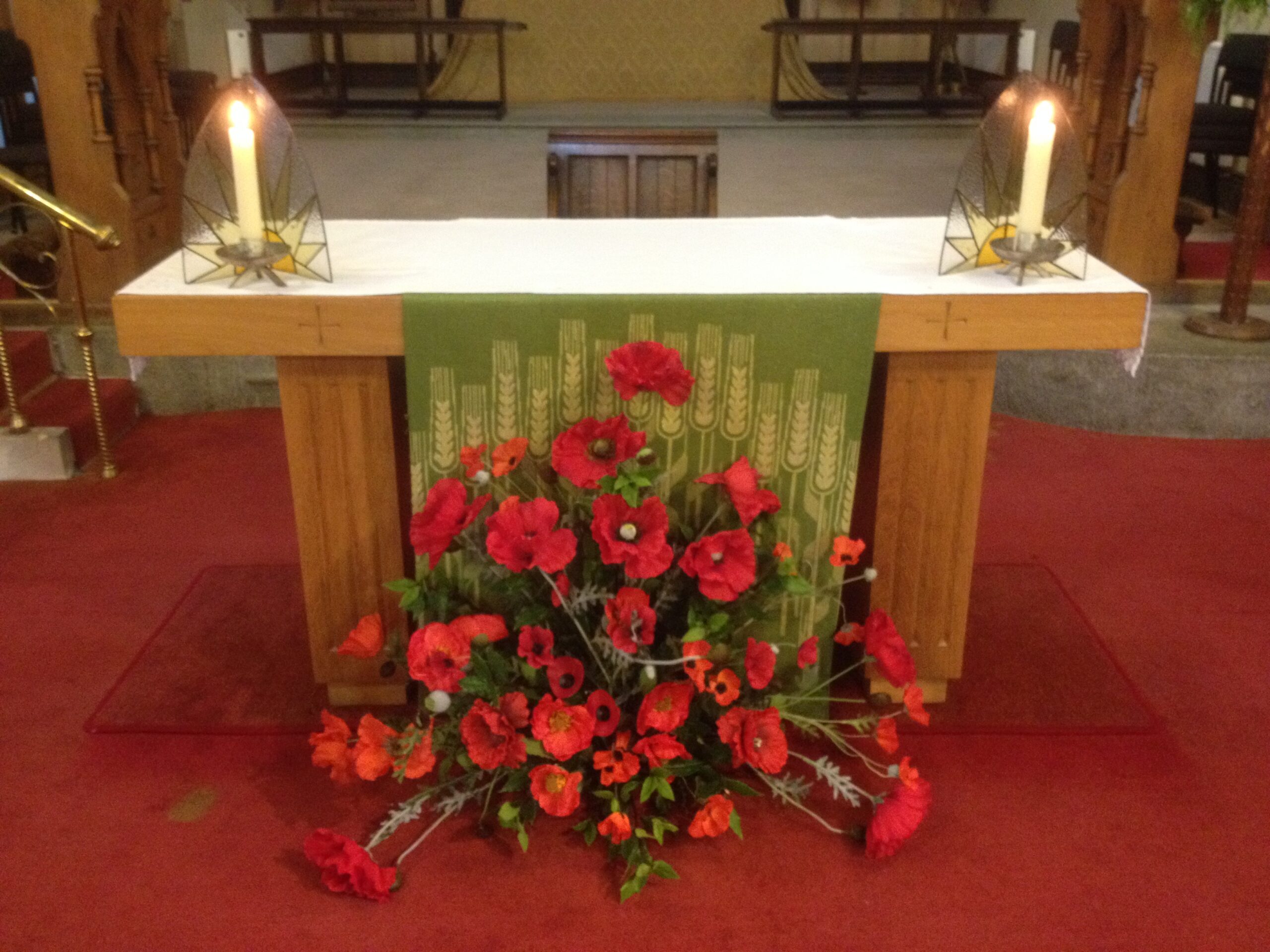
Over the last few years I have visited many schools across South Yorkshire. One thing I have noticed, wherever I have been, is that every school has a set of values. They are often displayed: posted on noticeboards, painted on walls, they sometimes appear on tee shirts. They vary hugely, though there are some commonalities.

All primary schools seem to have something along the lines of ‘kindness’ or ‘friendliness’. Secondary schools generally have something along the lines of ‘ambition’ or ‘excellence’. Both primary and secondary will have ‘tolerance’ or ‘respect’ or something that means the same thing.

But there are many other values. From memory I recall: empathy, happiness, resilience, compassion, confidence, fairness … the list goes on.

I wondered when this need to set out the school’s values like this started as I didn’t remember it from the schools of my youth.

At least that was what I first thought. Then I realised that my boys’ grammar school did have values, but hid them inside a Latin motto that was part of the school badge – which I wore on my cap until I was 18.

We also sang the values in songs and hymns every day at morning assembly, which in those days was an act of worship.

One of my favourites was called Treasure. I still remember it. The first verse went like this:

Daises are our silver,
Buttercups our gold.
These are all the treasures
We can have or hold.

This is not very aspirational. I can see why ni head teacher would want that sung now. We must aspire to a good salary and not be content with a buttercup. (Though it didn’t stop my school producing a governor of the Bank of England.) But it does commend an appreciation of the natural world, which is very relevant in these days of anxiety about nature.

In those decades just after the second world war, many of these hymns reflected quite explicitly Christian values. We shall have one later:

When a knight won his spurs
in the stories of old,
he was gentle and brave, he was gallant and bold...

Other hymns commended unselfishness, sacrifice, hard work, not clock-watching, putting others first. It was thought that these values got us through the war and were needed to bring post-war renewal.

These were the default values of that time.

Fast forward to the present and we find that these are not the values people want to start with now. Not hard work and self sacrifice but almost the opposite. And all organisations have them, not just schools. They are often now about personal well-being, life-work balance and so on.

A well-being champion in my office in my last job summed them up in a wonderful post one week. It said: When you are saying yes to others, make sure you are not saying no to yourself’. That captures the essence of so many of these modern values very well. This is the new default position.

No wonder so many people find Remembrance day a puzzle. It creates a tension between that new emphasis and what the men and women who fought and died stood for.

Putting the interests of others ahead of your own, self-sacrifice. These are not often part of the default values of modern Britain. Perhaps on Remembrance Sunday it’s time to revisit them.

The Prayers

Let us pray for all who suffer as a result of conflict,
and ask that God may give us peace:

for the service personnel
who have died in the violence of war,
each one remembered by and known to God;
may God give peace.
God give peace.

For those who love them in death as in life,
offering the distress of our grief
and the sadness of our loss;
may God give peace.
God give peace.

For all members of the armed forces
who are in danger this day,
remembering family, friends
and all who pray for their safe return;
may God give peace.
God give peace.

For civilians, children and adults
whose lives are disfigured by war or terror,
calling to mind in penitence
the anger and hatreds of humanity;
may God give peace.
God give peace.

For peacemakers and peacekeepers,
who seek to keep this world secure and free;
may God give peace.
God give peace.

For all who bear the burden and privilege of leadership,
political, military and religious;
asking for gifts of wisdom and resolve
in the search for reconciliation and peace;
may God give peace.
God give peace.

O God of truth and justice,
we hold before you those whose memory we cherish,
and those whose names we will never know.
Help us to lift our eyes above the torment of this broken world,
and grant us the grace to pray for those who wish us harm.
As we honour the past,
may we put our faith in your future;
for you are the source of life and hope,
now and for ever.
Amen.


Common Worship: Services and Prayers for the Church of England, material from which is used here is copyright (c) 2000 The Archbishops' Council


3rd November 2024 6.30pm – All Souls Memorial Service

Watch this week's service on YouTube

Download the order of service here: 24 11 03 Memorial service


The Reading

Romans 14. 7 - 12 

The life and death of each of us has its influence on others; if we live, we live for the Lord; and if we die, we die for the Lord, so that alive or dead we belong to the Lord. This explains why Christ both died and came to life, it was so that he might be Lord both of the dead and of the living.
We shall all have to stand before the judgement seat of God; as scripture says: By my life – it is the Lord who speaks – every knee shall bend before me, and every tongue shall praise God. It is to God, therefore, that each of us must give an account of themselves.


Taken from The Jerusalem Bible, published and copyright 1966,1967 and 1968 by Darton, Longman & Todd Ltd and Doubleday and Co. Inc, and used by permission of the publishers.

The Sermon
By Kath, Reader St Mary's.

Losing people we love or are close to is sadly inevitable at some stage, especially as we ourselves grow older; it’s part of our human existence. Such loss is hard enough to bear when a death is expected or even “timely” but so much harder when it is sudden or traumatic or untimely. How do we deal with such loss? The simple answer; although it isn’t a simple process to go through, is that we grieve. How we grieve is unique to us as individuals and to our relationship with the person we have lost, and it is something that develops and changes over time. This is as it should be because there is no “one way” that works for everyone for all time.

To illustrate what I mean I’ll share some of my own experiences of loss. I loved my mum and dad dearly and we were very close. We worked together for many years and saw each other socially a lot, so perhaps you can imagine how guilty and bad I felt when I couldn’t cry when they died. That is still the case to this day and I lost my dad seventeen years ago and my mum six years ago. How could it be that we were so close and yet I couldn’t cry? At first all sorts of awful thoughts went through my head. Had I become hard-hearted or unfeeling I wondered, genuinely fearfully. But I had to tell myself no, because I continue to love and miss my parents. One of the biggest things that has helped me deal with these uncomfortable feelings is the realisation that I actually did a lot of my grieving for them while they were still alive and this in turn reminded me of one of the most meaningful lectures I’ve ever heard. It was given by the then chaplain at the Northern General Hospital, Revd. David Equeall, when I was a student nurse back in the 1970s. Up to the time I heard his lecture I had always thought of grieving only in relation to death but he explained how we can grieve for many other kinds of loss too, and indeed I saw this in many of the patients I went on to care for.

My dad lived for ten years after receiving a terminal diagnosis and during that time I watched him gradually lose many of his skills and abilities, his strength, his privacy and dignity, his freedom to go about his life as he once had. He never really complained much and was endlessly practical in finding ways round his difficulties but I know each loss hurt him. He had always been the one to fix things for others and now he was the one needing to be helped. It didn’t sit well or easily with him and I grieved those losses with and for him. Towards the end of his life he was in a lot of pain and when he died, if I’m completely honest it was a relief that he was no longer suffering.

The illness that took my mum from us was Alzheimer’s disease and it was truly heartbreaking to see her gradually robbed her ability to enjoy her life and to look after herself, her dignity and autonomy and worst of all her wonderful personality and her voice. She had always been unfailingly kind and compassionate and loved talking to people so it was cruel to see her grow quieter and quieter until she barely spoke at all. Again I grieved this and felt angry as it was happening and then relief when she was finally released from what this awful disease had done to her. But much as I loved and miss both my mum and dad I couldn’t have wished to hold onto them or to wish them back unless it was without the suffering they endured.

As preachers we seldom get a choice of readings for the services we preach at but this one is different. At first I struggled to find one that really spoke to me but when I found the one from Romans; and it is a slightly unusual version, I knew it was the one and it was the first sentence in this particular translation that I found so powerful.

“The life and death of each of us has its influence on others;” The very fact that you’re here at this service tells me that you have been through your own unique journey or journeys of loss and perhaps, like me, you have a whole host of mixed feelings and emotions about your relationship with your own loved one and the way you lost them. But wouldn’t it be saddest of all if it was the ending of their lives that was our overriding memory of them. When the time is right for us it’s good to remember all the different aspects of our time with them. We don’t have to pretend that all was perfect because that’s seldom how life really is but hopefully there will be positive, happy and uplifting memories to cherish that will help to sustain us as we move on with our own lives because move on we must. Grief, when it is raw, can be all consuming and allowing it to soften can feel like betrayal but think about it another way. If we were the ones who had died, would we want those we left behind to be in pain forever? I’m pretty sure the answer to that is no.

Thinking of what our loved ones have been to us, perhaps we should also consider who and what we are to others. Do we support and inspire and encourage them to live good lives as we have been inspired. I will be forever grateful for the love and support and life lessons I have received from the people I have lost and I hope in turn that I’m doing the same for the people I still have.

God gave us his own beloved Son that we might have life. Should we not take this gift of life and value it as it deserves in gratitude to the one who gave it, even in the midst of our sadness. Surely the answer this time is yes.

Amen.

The Prayers

God our Father, hear us when we pray to you in faith.

We give you thanks for the lives of those who we have loved and lost.
For all that we were to each other and all that we shared together.
Hear us, risen Lord,
our resurrection and our life.

Comfort us in our times of grief and help us to help each other in our sadness.
Hear us, risen Lord,
our resurrection and our life.

Guide and uphold us through the loneliness and darkness of loss, especially when it feels like our pain will never come to an end.
Hear us, risen Lord,
our resurrection and our life.

But when the time is right, Lord give us the courage to live again, for our own sake and for those who love and need us, secure in the knowledge that those we have lost, rest in peace with you.
Hear us, risen Lord,
our resurrection and our life.

May God in his infinite love and mercy bring the whole Church,
Living and departed in the Lord Jesus, to a joyful resurrection and the fulfilment of his eternal kingdom.
Amen.


23rd June 2024 10.30am – 4th Sunday after Trinity – Eucharist

Watch this week's service on YouTube

Download the order of service here: 24 06 23 4th Sunday after Trinity Eucharist

Read this week's Church News


The Readings

2 Corinthians 6. 1 - 13 

As we work together with him, we urge you also not to accept the grace of God in vain. For he says,

‘At an acceptable time I have listened to you,
and on a day of salvation I have helped you.’

See, now is the acceptable time; see, now is the day of salvation! We are putting no obstacle in anyone’s way, so that no fault may be found with our ministry, but as servants of God we have commended ourselves in every way: through great endurance, in afflictions, hardships, calamities, beatings, imprisonments, riots, labours, sleepless nights, hunger; by purity, knowledge, patience, kindness, holiness of spirit, genuine love, truthful speech, and the power of God; with the weapons of righteousness for the right hand and for the left; in honour and dishonour, in ill repute and good repute. We are treated as impostors, and yet are true; as unknown, and yet are well known; as dying, and see—we are alive; as punished, and yet not killed; as sorrowful, yet always rejoicing; as poor, yet making many rich; as having nothing, and yet possessing everything.

We have spoken frankly to you Corinthians; our heart is wide open to you. There is no restriction in our affections, but only in yours. In return—I speak as to children—open wide your hearts also.


Mark 4. 35 - end

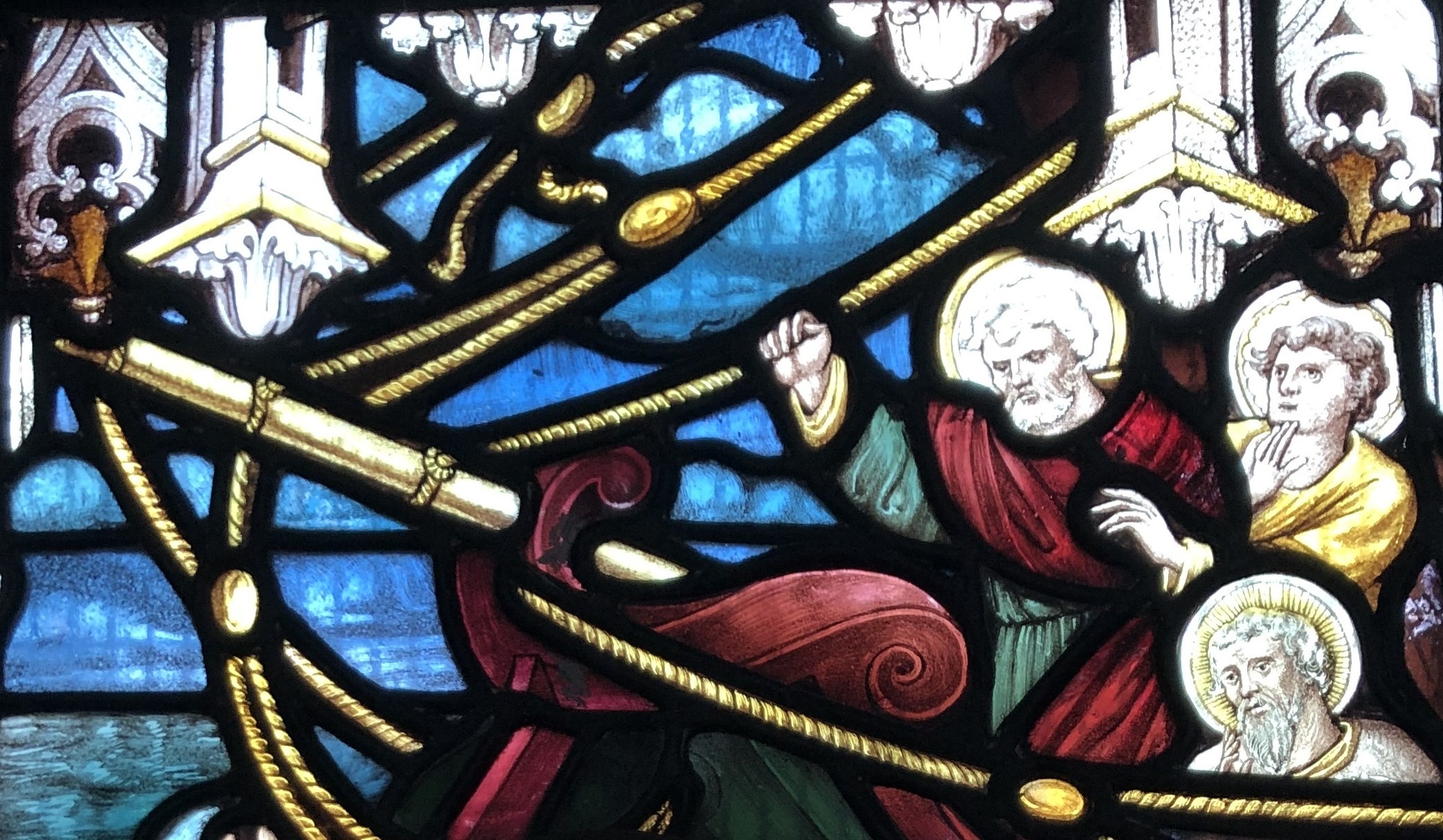
On that day, when evening had come, he said to them, ‘Let us go across to the other side.’ And leaving the crowd behind, they took him with them in the boat, just as he was. Other boats were with him. A great gale arose, and the waves beat into the boat, so that the boat was already being swamped. But he was in the stern, asleep on the cushion; and they woke him up and said to him, ‘Teacher, do you not care that we are perishing?’ He woke up and rebuked the wind, and said to the sea, ‘Peace! Be still!’ Then the wind ceased, and there was a dead calm. He said to them, ‘Why are you afraid? Have you still no faith?’ And they were filled with great awe and said to one another, ‘Who then is this, that even the wind and the sea obey him?’


Scripture Quotations are from: New Revised Standard Version Bible: Anglicized Edition, copyright © 1989, 1995 National Council of the Churches of Christ in the United States of America. Used by permission. All rights reserved worldwide. http://nrsvbibles.org

The Sermon
By The Revd Canon Dr Alan Billings.

You may find this hard to believe, but I love washing up. Some people go into
the kitchen and see the chaos of piles of unwashed dishes and their hearts
sink. I go in and feel exhilarated. It brings me joy to be able to take control
and bring order out of chaos.

If I wonder why this should be, I think of the first chapter of the Book of
Genesis – the story of the creation. We tend to think that Genesis says that
God created everything from nothing – and the story is not incompatible with
that idea. But what Genesis actually says is that the Spirit of God made
something out of what was already there, taking something that was without
form and void, where darkness was over the face of the deep, and brining
order out of chaos.

The Spirit of God separated light and dark, bringing day and night, sun and
moon. The Spirit of God brought the land out of the water and populated both
with fishes, plants, birds and beasts, and people.

In other words, the Spirit of God brought order out of chaos, which is what we
do when we do the washing up. We take control and establish order. And that
gives me, at any rate, a good feeling.

I don’t know whether that will give you something to think about when you
next do the washing up – assuming you don’t just put it in a dishwasher – but
the idea of having control, of being able to overcome chaos and bring order
and stability is an interesting psychological insight. It’s something that seems
basic to human living, something we seek to do all the time.

But washing up is a trivial example. There are many ways in which chaos
threatens our lives and our well-being and they are ways that are less easy to
control.

Foundational things.

The relationships between parents and children, between partners, between
friends. They can be fractured. The jobs we have, the homes we live in, our
savings, our health, our ability to grow old with dignity. All can be at risk. The
chaos of anxiety, worry, even fear, is never far away. And our ability to control
externals of this kind may amount to little or nothing.

Now this, I think, is what today’s gospel is getting at. The story is simple. After
a day of teaching, by the Sea of Galilee, Jesus gets into a boat with his
disciples to go across to the other side. Exhausted, he falls asleep on a
cushion. A storm gets up. The waves crash against the boat and it starts to
take on water. The disciples are frightened. They wake up Jesus. He stills the
wind and the waves.

These are, if you like, the externals. But the focus is less on the externals and
more on the disciples and what is going on with them internally. We can
imagine the emotions they would have gone through as the wind starts to
increase. They are concerned. Their concern turns to worry. Their worry
becomes fear. A fear compounded by the fact that Jesus is asleep and seems
not to care.

This is a pattern of emotions we may well recognise from things that have
happened to us in life.

Think of health. We notice something wrong with us. We spot signs and
symptoms. We are concerned. We Google it up. We become worried. We go
the GP and are referred to the hospital. Our worries become fears. Or think of
finances. We lose our job. We are concerned. We write endless job
applications. Our worries become fears.

These are journeys any of us may have made or may yet make from
something external that impacts us. And for people of faith, such as us, we
may well feel that Christ is asleep in the boat.

The disciples need to hear the voice of Jesus, his re-assuring voice: ‘Why are
you afraid? Have you no faith?’

‘Peace! Be still,’ he says – and he says it as much to the disciples at to wind
and wave.

We cannot tell whether or not we will experience any of these moments when
chaos seems about to break in and rob us of our security, our happiness, our
peace of mind.

What today’s gospel is saying to us is this. There was once an occasion when
the hearts and minds of the disciples were threatened by external factors that
almost frightened them to death. They thought they had been abandoned,
that Christ did not care. Until they heard his voice.

If our inner peace is threatened, we ned to draw on that memory and hear
that same voice: ‘Why are you afraid? Have you no faith? Peace! Be still’.


The Prayers
Prepared by David.

Jesus calls us o’er the tumult of our life’s wild, restless sea;
Day by day his sweet voice soundeth, saying ‘Christian, follow me.’
We pray for the church, for our Bishops Pete and Sophie, for all who minister in our Mission Area
We give thanks for the calling given to each of us to serve in many different ways. Give us wisdom and strength to fulfil our calling, working together with you for the coming of the Kingdom.
Jesus, Lord of your Church,
in your mercy hear us.

I cannot tell how he will win the nations, how he will claim his earthly heritage,
how satisfy the needs and aspirations of east and west, of sinner and of sage.
We pray for the world and the leaders of the nations.
For places where human greed, hatred and hardness of heart cause pain and suffering.
We give thanks for peace makers, peace keepers and those work for the relief of pain and suffering.
Jesus, Lord of your Church,
in your mercy hear us.

Eternal Father strong to save, whose are doth bind the restless wave,
Who bidd’st the mighty ocean deep its own appointed limits keep.
We pray for all those who travel the worlds waterways in a time of increased danger.
We give thanks for the crucial role they play in the transportation of food and other goods around the world.
We pray for their safety and the free flow of marine shipping throughout the world.
Jesus, Lord of your Church,
in your mercy hear us.

I cannot tell how silently he suffered,
As with his peace he graced this place of tears,
Or how his heart upon the cross was broken,
The crown of pain to three and thirty years.
We pray for all those who suffer in body, mind or spirit, the lonely, the anxious, the depressed and those in pain.
We give thanks for those who care, offering support through companionship, diagnosis and treatment and pain relief.
We silently hold in our hearts those known to us.
Jesus, Lord of your Church,
in your mercy hear us.

O Jesus, thou hast promised to all who follow thee,
that where thou art in glory there shall thy servant be.
We pray for those who have died and those nearing the end of their earthly lives.
We give thanks for all that they have given us and the ways they have shaped our lives.
We name them silently in our hearts.
Jesus, Lord of your Church,
in your mercy hear us.

O let me see thy foot-marks and in them plant mine own;
My hope to follow duly is in thy strength alone:
And, Jesus, I have promised to serve thee to the end:
O give me grace to follow, my Master and my friend.
We pray for ourselves, for all that lies ahead of us in the coming week.
We give thanks for the people we will meet and for time spent in work and relaxation.
May we each take something of God’s love out into the world.
Jesus, Lord of your Church,
in your mercy hear us.

Merciful Father
Accept these prayers
for the sake of your Son,
Jesus Christ,
Amen.


Common Worship: Times and Seasons, material from which is used here is copyright (c) 2010 The Archbishops' Council
Hymn verses copyright (c) of their respective owners.


7th January 2024 10.30am – Eucharist on the Feast of the Epiphany

7th January 2024 Eucharist on the Feast of the Epiphany: 

Watch this week's service on YouTube

Download the order of service here: 24 01 07 Epiphany Eucharist

Read this week's Church News


The Readings

Isaiah 60. 1 - 6

Arise, shine; for your light has come,
and the glory of the Lord has risen upon you.
For darkness shall cover the earth,
and thick darkness the peoples;
but the Lord will arise upon you,
and his glory will appear over you.
Nations shall come to your light,
and kings to the brightness of your dawn.
Lift up your eyes and look around;
they all gather together, they come to you;
your sons shall come from far away,
and your daughters shall be carried on their nurses’ arms.
Then you shall see and be radiant;
your heart shall thrill and rejoice,
because the abundance of the sea shall be brought to you,
the wealth of the nations shall come to you.
A multitude of camels shall cover you,
the young camels of Midian and Ephah;
all those from Sheba shall come.
They shall bring gold and frankincense,
and shall proclaim the praise of the Lord.


Matthew 2. 1 - 12

In the time of King Herod, after Jesus was born in Bethlehem of Judea, wise men from the East came to Jerusalem, asking, ‘Where is the child who has been born king of the Jews? For we observed his star at its rising, and have come to pay him homage.’ When King Herod heard this, he was frightened, and all Jerusalem with him; and calling together all the chief priests and scribes of the people, he inquired of them where the Messiah was to be born. They told him, ‘In Bethlehem of Judea; for so it has been written by the prophet:
“And you, Bethlehem, in the land of Judah,
are by no means least among the rulers of Judah;
for from you shall come a ruler
who is to shepherd my people Israel.” ’
Then Herod secretly called for the wise men and learned from them the exact time when the star had appeared. Then he sent them to Bethlehem, saying, ‘Go and search diligently for the child; and when you have found him, bring me word so that I may also go and pay him homage.’ When they had heard the king, they set out; and there, ahead of them, went the star that they had seen at its rising, until it stopped over the place where the child was. When they saw that the star had stopped, they were overwhelmed with joy. On entering the house, they saw the child with Mary his mother; and they knelt down and paid him homage. Then, opening their treasure-chests, they offered him gifts of gold, frankincense, and myrrh. And having been warned in a dream not to return to Herod, they left for their own country by another road.


Scripture Quotations are from: New Revised Standard Version Bible: Anglicized Edition, copyright © 1989, 1995 National Council of the Churches of Christ in the United States of America. Used by permission. All rights reserved worldwide. http://nrsvbibles.org

The Sermon
By the Revd Sue Hammersley.

To be uploaded shortly.

The Prayers

Today the Magi knelt before our Saviour.
Let us also kneel to worship him with great joy,
and to make our prayer to his heavenly Father.

Father, the Magi came from the east to worship your Son:
grant to Christians everywhere a true spirit of adoration.
Lord of glory,
hear our prayer.

Father, your Son is the King of kings and Lord of lords:
grant an abundance of peace to your world.
Lord of glory,
hear our prayer.

Father, the Holy Family shared the life of the people of Nazareth:
protect in your mercy our neighbours and families,
together with the whole community of which we are part.
Lord of glory,
hear our prayer.

Father, your Son was rich, yet for our sakes he became poor:
show your love for the poor and powerless,
and strengthen all those who suffer.
Lord of glory,
hear our prayer.

Father, the Magi presented to your Son gold, incense and myrrh:
accept the gifts we bring,
and the offering of our hearts at the beginning of this new year.
Lord of glory,
hear our prayer.

Father, you are the King of heaven, the hope of all who trust in you:
give to all the faithful departed the wonders of your salvation.
Lord of glory,
hear our prayer.

Rejoicing in the fellowship of Magi, shepherds and angels,
and of the Blessed Virgin Mary and Saint Joseph,
we commend ourselves and all Christian people
to your unfailing love.
Merciful Father,
accept these prayers
for the sake of your Son,
our Saviour Jesus Christ.
Amen.

Common Worship: Times and Seasons, material from which is used here is copyright (c) 2010 The Archbishops' Council
 

31st December 2023 10.30am – Eucharist on the First Sunday of Christmas

31st December 2023 First Sunday of Christmas Eucharist: 

Watch this week's service on YouTube

Download the order of service here: 23 12 31 1st Sunday of Christmas Eucharist

Read this week's Church News


The Readings

Isaiah 61. 10 - 62. 3

I will greatly rejoice in the Lord,
my whole being shall exult in my God;
for he has clothed me with the garments of salvation,
he has covered me with the robe of righteousness,
as a bridegroom decks himself with a garland,
and as a bride adorns herself with her jewels.
For as the earth brings forth its shoots,
and as a garden causes what is sown in it to spring up,
so the Lord God will cause righteousness and praise
to spring up before all the nations.

For Zion’s sake I will not keep silent,
and for Jerusalem’s sake I will not rest,
until her vindication shines out like the dawn,
and her salvation like a burning torch.
The nations shall see your vindication,
and all the kings your glory;
and you shall be called by a new name
that the mouth of the Lord will give.
You shall be a crown of beauty in the hand of the Lord,
and a royal diadem in the hand of your God.


Luke 2. 15 - 21

When the angels had left them and gone into heaven, the shepherds said to one another, ‘Let us go now to Bethlehem and see this thing that has taken place, which the Lord has made known to us.’ So they went with haste and found Mary and Joseph, and the child lying in the manger. When they saw this, they made known what had been told them about this child; and all who heard it were amazed at what the shepherds told them. But Mary treasured all these words and pondered them in her heart. The shepherds returned, glorifying and praising God for all they had heard and seen, as it had been told them.

After eight days had passed, it was time to circumcise the child; and he was called Jesus, the name given by the angel before he was conceived in the womb.


Scripture Quotations are from: New Revised Standard Version Bible: Anglicized Edition, copyright © 1989, 1995 National Council of the Churches of Christ in the United States of America. Used by permission. All rights reserved worldwide. http://nrsvbibles.org

The Sermon
By the Revd Canon Dr Alan Billings.

But Mary kept all these things, pondering them in her heart.

After all the initial anxieties and hardship,
After finding nowhere in Bethlehem to stay, save this outhouse beside an inn.
After the birth, with no cradle for the child, only an animal’s feeding trough.
After the first visitors, the locals, shepherds, have come and gone.
After all the pain and discomfort and stress, there’s a pause.

And this young mother, almost certainly a teenager, looks down at her son,
and ponders in her heart.

Ponders what, we might wonder?

Well, she’s probably thinking in ways that all mothers do as they take a
moment to look at their new-born child and wonder.

Wonder in both senses. Wonder at how something as amazing as this – a
new life – should have come into the world through them, and wonder too at
what they must now do and be for them, if they are to grow and live well.
What the gospel writer is drawing to our attention is the fact that this marks
the beginning of two vocations. Yes, here begins the story of Jesus Christ.
But here also begins another, inseparable story, that of Mary, his mother.
One reason why I particularly like St Luke’s gospel is because of all the
gospel writers, it is Luke who, even as he tells the story of Jesus, threads the
story of Mary through it as well.

So it’s in Luke’s gospel that we will hear how Mary and Joseph take the child
to Jerusalem for the ritual of Mary’s purification after childbirth. It’s then that
they will meet the old man Simeon who will tell Mary that her son is destined
for the fall and rising of many in Israel, and a sword will pierce through her
own soul also.

It’s in Luke’s gospel that we will hear how Mary and Joseph again take Jesus
to the temple at the age of 12 – the age at which boys become part of the
congregation of Jewish men - and accidentally leave him behind when they
return home.

And above all, it is Luke who will tell us how Mary will be present in
Jerusalem when her son is arrested, cruelly treated and put to death.
So Mary’s vocation as a mother also begins at Christmas.

But how is her mothering of the Saviour to be different from that of other
mothers whose children are not so destined?

The answer is, it isn’t different. The whole point about Christianity is that God
becomes one of us. This is the heart of the faith and the very thing that has
shocked many pious people down the ages.

It shocks devout Muslim friends of mine today: how can you say that God is in
Jesus Christ when Jesus Christ is humiliated, suffers and dies? God cannot
be subject to such frailty and failing. This cannot be God in the manger.
But we say: this is God choosing to come among us, revealing himself
through the life of this human child, who is no different from all the other
babies that were born that night.

And this takes us to the heart of Mary’s vocation.

Children do not come into the world with fully formed characters. They learn
by observation and imitation. If anything, we arrive self-centred and selfish
When we are hungry we don’t consider the needs of others, we cry until we
are fed. When we are in discomfort we scream until someone changes our
nappy. This is how a child survives – it is totally dependent on its parent or
guardian. We make the journey from being utterly self-centred to something
more considerate as we see in those around us other ways of behaving,
imitate them and are praised for our unselfishness.

If Jesus is to be kind, generous, loving, forgiving, he must see that in his
mother’s care. Because this is a critical way in which human character is
initially formed.

If this all seems so risky a venture, so it is.

But it’s what we mean when we say, the Word became flesh. God chose to
become human in order to show us the better ways of living. And key to that
is this young woman, his mother. He will imitate her.

This is the profound and frightening truth that she ponders as she looks at her
new-born child.


The Prayers
Prepared by Kath.

To be uploaded shortly.

Common Worship: Times and Seasons, material from which is used here is copyright (c) 2010 The Archbishops' Council